
Everyday Newborn Care: Guide to Flat Head Syndrome
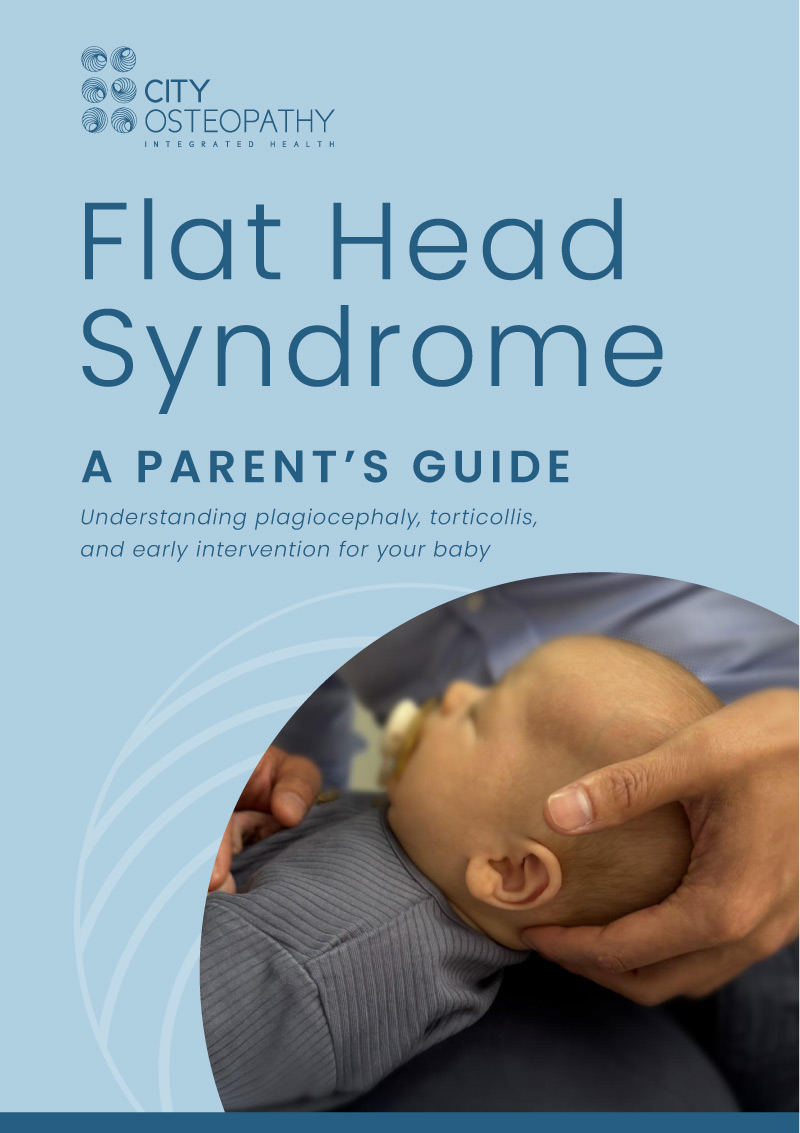
What is Flat Head Syndrome?
Flat head syndrome (deformational plagiocephaly) is a condition where part of a baby's skull develops a flattened area, typically on the back or one side of the head. It happens because a baby's skull bones are still soft and mouldable in the early months, and sustained pressure on one area can gradually influence the shape.
While many cases are primarily cosmetic, some are associated with other developmental considerations that benefit from early professional attention.
How do I spot flat head syndrome in my baby?
A flat area on the back or side of the skull, noticeable facial or ear asymmetry, or a consistent preference for resting the head in one position.
What causes flat head syndrome?
- Sleeping position – consistently resting with the head turned to one side.
- Limited tummy time – prolonged pressure on the back of the skull.
- Torticollis – neck muscle tightness causing a head-turning preference.
- Womb positioning – breech presentation, low fluid, or multiple pregnancies.
- Equipment time – extended periods in car seats, bouncers, or carriers.
Flat Head Syndrome & Torticollis often coexist. A baby with neck tightness may develop flattening due to limited head movement, while uneven head shape can reinforce a preference for turning to one side.
What is torticollis and how is it related to flat head syndrome?
Torticollis involves tightness in the neck muscle (sternocleidomastoid), causing the head to tilt to one shoulder while the chin rotates the other way. It is one of the most common contributing factors to flat head syndrome.
What are the signs of torticollis in a newborn?
Flat area on skull. Head tilting to one side. Uneven ear alignment. One-sided feeding preference. Facial asymmetry. Tummy time frustration.
How effective is early treatment for torticollis?
Around 90–95% of cases resolve with conservative care; research* shows babies starting treatment before 1 month have up to a 98% chance of full neck movement within about 6 weeks, while starting between 1–6 months typically takes around 6 months of support.
*from the Children's Hospital of Philadelphia
What does City Osteopathy's Happy Melons Programme include?
Structured support from the months that matter most. Our Happy Melons Programme provides assessment, measurement, and gentle treatment from as early as birth, designed specifically for the window when early intervention is most effective.
- Initial Consultation and Assessment: comprehensive intake covering pre- and postnatal history, assessment of neck movement, head shape, and postural patterns, and a personalised monitoring plan.
- Monthly Head Shape Tracking: regular measurements throughout the first six months with a detailed report after each visit.
- Developmental Milestone Check-ups: each session includes a broader developmental assessment alongside head shape monitoring.
- Gentle Manual Therapy: very light, non-invasive hands-on treatment appropriate for a newborn's developing body, supporting healthy cranial development and balanced neck movement.
What should I expect on our first visit?
Tell us what's going on. We start with your concerns, whether that's feeding difficulties, unsettled sleep, or a preference for turning their head one way. A detailed history. We ask about pregnancy, birth, and feeding, as many early concerns are often linked to how well a baby can move their neck.
A gentle, paced assessment. Paediatric consultations are led by Benjamin Lai, our Principal Osteopath with Advanced Paediatric Osteopathy qualifications from London's Osteopathic Centre for Children.
What we find, explained clearly. We talk you through what we've observed and what it might mean, with plenty of time for questions.
A plan, if one's needed. Depending on what we find, this might include gentle osteopathic treatment, guidance for home, or referral elsewhere if that's a better fit.
What can I do at home to help prevent or manage flat head syndrome?
Professional monitoring is important, but there is a great deal parents can do between sessions to support healthy development.
- Tummy Time: start with 1–2 minutes several times a day. Builds neck, shoulder, and core strength while reducing skull pressure.
- Sleep Repositioning: always place baby on their back. Alternate the direction the head faces and reposition the cot to encourage looking both ways.
- Carrying & Feeding: vary the arm you carry baby in and alternate feeding sides.
- Encourage Head Turning: place toys or position yourself on baby's less-preferred side during play to gently encourage balanced neck movement.
The first six months matter most. Early support can make a meaningful difference. No obligation after an initial consultation.
Book an appointment below or request a callback, and we'll take it from there.