What are knock knees?
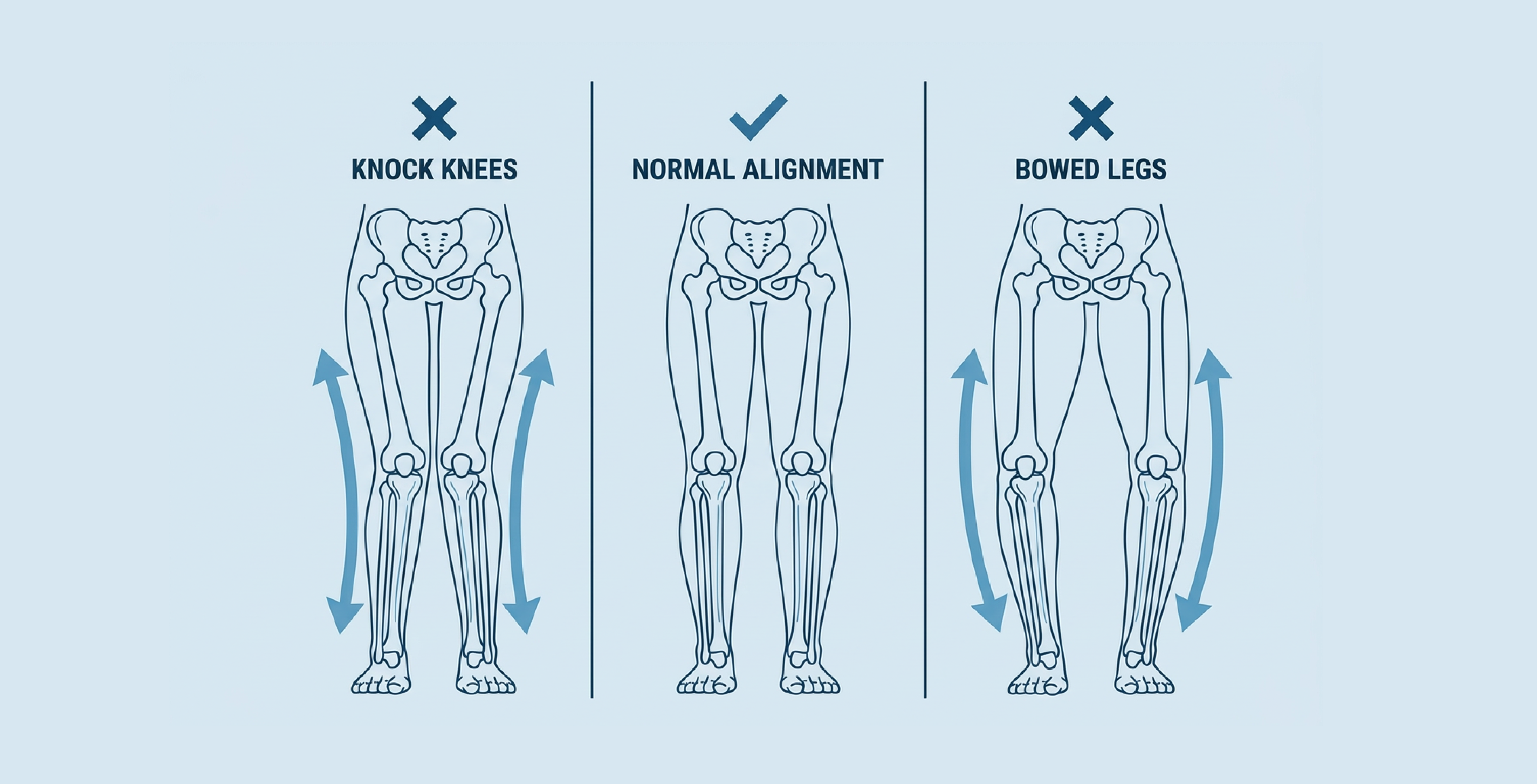
Knock knees describe a stance where a child's knees touch or nearly touch when they stand with their feet apart. You might notice a gap between the ankles when the knees are together, or that the knees seem to angle inwards when your child runs.
This is very common in preschool-aged children and usually corrects itself gradually as they grow. Signs that it may be worth an assessment include:
- Knock knees that are still pronounced after the age of around seven or eight
- One leg noticeably more affected than the other
- Knee or leg pain, or a limp
- A child who is unusually short or tall for their age alongside the leg pattern
What is pigeon toe, or in-toeing?
Pigeon toe, also called in-toeing, describes feet or toes that point inwards when a child walks or runs. Some children look like they're tripping over their own feet, and occasionally they do, though this usually improves as coordination and leg alignment develop.
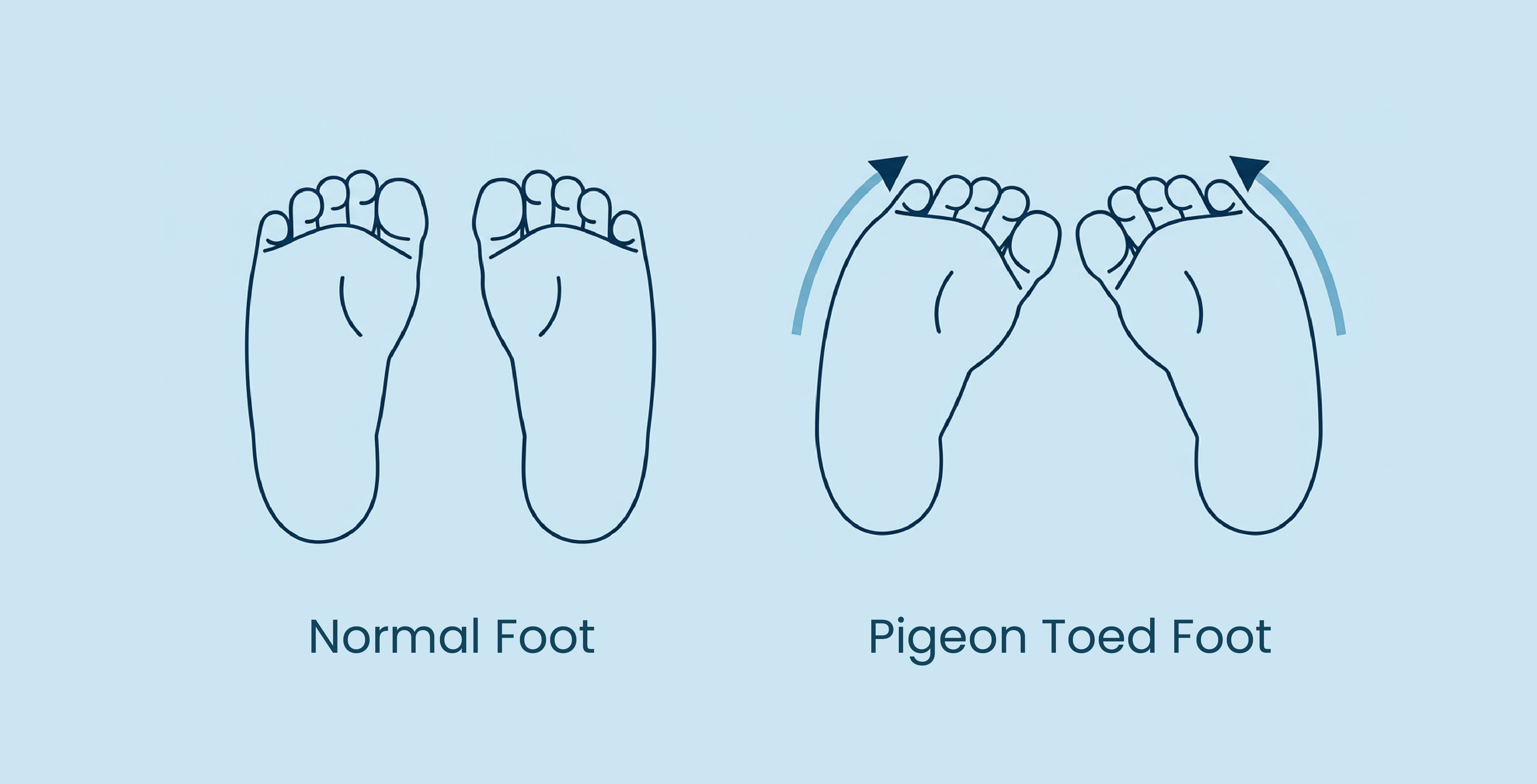
In-toeing often starts higher up than the foot itself. It can come from the way the thigh bone or shin bone rotates as it grows, or from the shape of the foot in babies and very young children. Each of these tends to resolve on its own over a different timescale, which is one reason children can in-toe at different ages for different reasons.
Signs that in-toeing may be worth an assessment include:
- In-toeing that is still noticeable after the age of around eight
- One side clearly more turned in than the other
- Frequent tripping or falling beyond what seems typical for your child's age
- Pain, stiffness or reluctance to walk or run
- In-toeing that appears suddenly rather than having been present from early on
Why do so many young children have knock knees or turned-in feet?
Knock knees and pigeon toe are two of the most common things parents notice about how their child stands and walks. Both are usually a normal part of how children's legs develop, and most children grow out of them without any treatment at all.
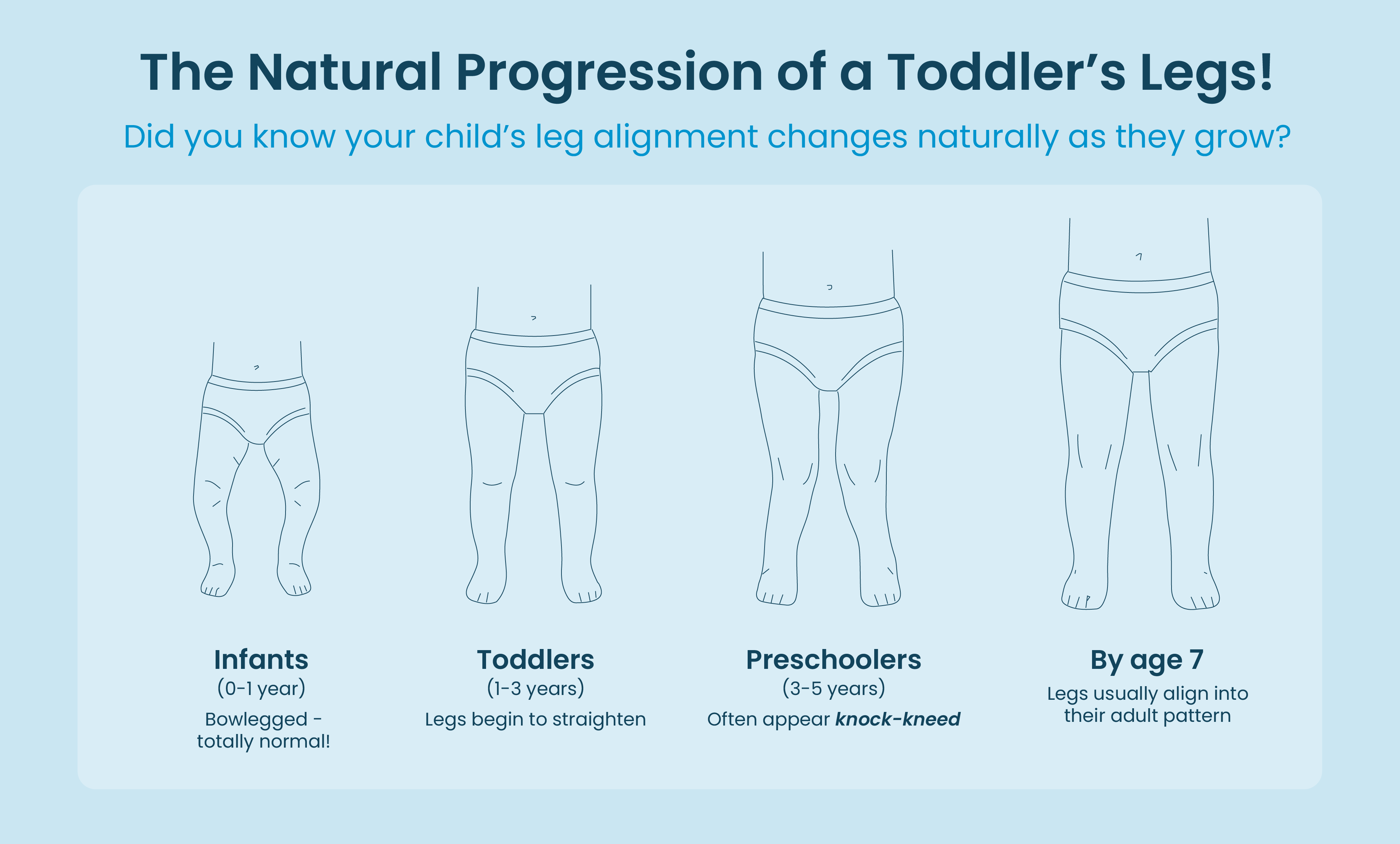
A child's legs change shape considerably in the first years of life. Many toddlers are bow-legged when they start walking. As they grow, the legs often swing the other way, into a knock-kneed stance that tends to be most noticeable between the ages of about three and five. By around seven or eight, most children's legs have settled into a straighter adult alignment. It can look dramatic along the way, but in most cases it's the body doing exactly what it's meant to do.
Do knock knees or pigeon toe need orthotics?
In most cases, no. Both patterns usually resolve with normal growth, and research doesn't support the routine use of special shoes, insoles or braces for typical cases.
The difficulty for parents is that "most cases" is hard to assess your own child. Age ranges and checklists give you a rough guide, but they can't tell you whether the pattern you're looking at is following the curve it should be, and waiting a year or two to find out isn't always a comfortable option.
That's what an assessment is for. It's not a commitment to treatment, and often the outcome is simply a clear answer: this is where your child is, this is what to expect, and here's what would make it worth coming back.
How can City Osteopathy Integrated Health help with knock knees or in-toeing?
An osteopath at City Osteopathy Integrated Health can assess how your child stands, walks and moves as a whole, looking at the hips, legs and feet together rather than at any one part in isolation.
Because in-toeing and knock knees often relate to how the leg bones and hips are aligned, this whole-picture assessment can help clarify where a pattern is coming from and whether it fits with normal development for your child's age. From there, the assessment findings determine what happens next.
For many children, that's simply reassurance and guidance on what to keep an eye on. Where a pattern may benefit from support, this might include hands-on treatment, movement guidance or advice on everyday habits. If anything suggests a child needs to see a specialist, we'll help you take that next step.
What can I do at home?
- Give your child plenty of varied, active play, including running, climbing and balancing
- Let them go barefoot at home where it's safe to do so on different surfaces, which helps the feet and legs develop naturally
- Avoid pressuring a child to "walk properly", as consciously correcting their gait rarely helps and can knock confidence
- Take an occasional photo or short video of how they stand and walk, which makes it easier to notice gradual change over time
When should I see someone about my child's knock knees or in-toeing?
An assessment is clearly worth arranging if the pattern is still noticeable past the age of around six, affects one side more than the other, or causes pain or frequent tripping.
But you don't need to wait for one of those signs. If you've been watching your child walk and wondering for a while now, that's reason enough to have it looked at, and often one visit is all it takes to know where things stand.
Book an appointment if you'd like a clear picture of your child's development.