Neck stiffness, tight shoulders and headaches have become increasingly common in modern life, especially after long hours at a desk or scrolling on a phone.
This pattern is often called “tech neck.” It’s less about technology itself and more about how our bodies adapt to the positions we spend the most time in.
Understanding how tech neck develops — and how to prevent it before it becomes painful — can make a meaningful difference to how your neck and upper back feel day to day.
People of all ages can experience this pattern, from office workers and students to older adults using tablets and phones more frequently.
What Is “Tech Neck”, Really?
Tech neck refers to a postural pattern that develops when the head repeatedly moves forward and the upper back rounds while looking down at devices.
Over time, the body may begin to treat this position as normal.
Instead of the head sitting comfortably over the shoulders, it gradually shifts forward.
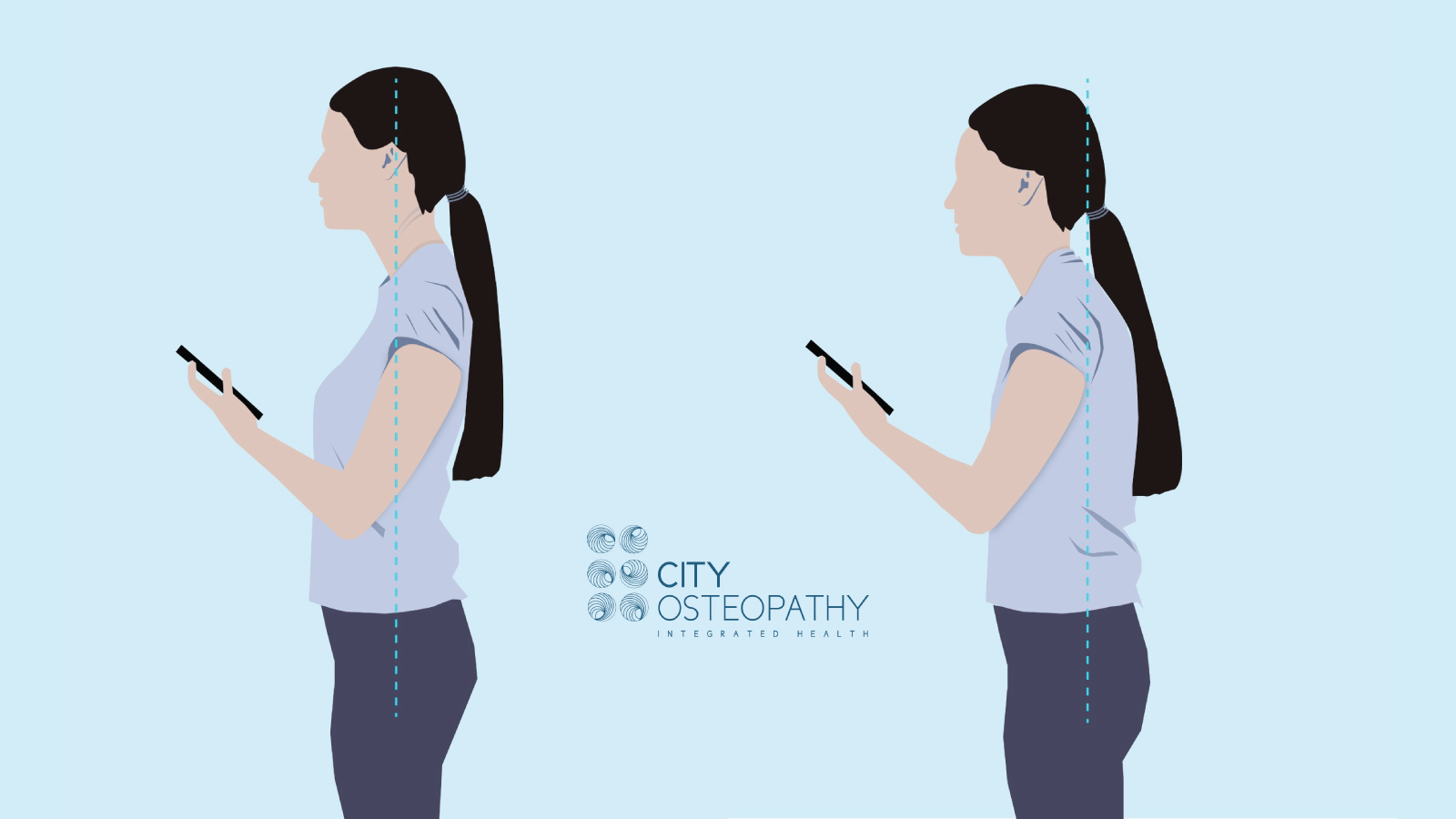
A quick tech neck self-check
You may recognise this pattern if you notice:
- The head jutting forward instead of stacking over the shoulders
- The chin poking out while the upper back rounds
- Shoulders creeping upwards or rolling forward
- Feeling stiff or “locked” when trying to sit upright
Side-profile photos or mirror checks can sometimes help reveal this pattern. If your head sits noticeably in front of your shoulders rather than stacked above them, the neck muscles may be working harder than they should.
Common symptoms include:
- Tight neck and shoulders
- Mid-back aching
- Tension headaches
- A heavy or fatigued feeling around the neck and upper back
These symptoms often build gradually, which is why many people assume they simply need more stretching.
Why “Just Stretching” Usually Isn’t Enough
Stretching can temporarily ease tight muscles, but tech neck rarely comes from one tight area alone.
It usually reflects a pattern involving the neck, shoulders, upper back and breathing mechanics.
When the head sits forward repeatedly:
- Some muscles become overworked and tight
- Others become underused or fatigued
- The upper back may lose mobility
- Shoulder blade movement may become less efficient
Because of this, fixing tech neck rarely comes from one stretch or exercise.
Relief often comes from restoring balance across the whole neck-shoulder-upper back system.
This is why a thorough assessment that looks at how these areas share the load is often more effective than chasing a single “perfect” stretch.
The Three Postures Working Professionals Repeat Daily
Many professionals unknowingly rotate between three similar positions throughout the day.

1. Desk Posture
Long hours at laptops can encourage:
- Forward head position
- Rounded shoulders
- Upper-back stiffness
Simple change:
Raise your screen closer to eye level and take a short movement break every 30–45 minutes.

2. Phone Posture
Phones encourage a downward gaze, which can quickly pull the head forward.
Simple change:
Bring the phone closer to eye level and rest your elbows on a table or armrest for support.

3. Relaxation Posture
In the evening, many people relax on the sofa or in bed with a phone or tablet.
While comfortable, the neck is often unsupported and angled forward.
Simple change:
Use cushions behind the upper back and under the arms so the neck doesn’t have to strain to look down.
Common Ergonomic Myths
Many people try to solve tech neck by buying new equipment such as standing desks or posture correctors.
While these tools can help support better positioning, they rarely change the underlying movement pattern.
Common misconceptions include:
“Perfect posture should feel effortless all day.”
No posture is designed to be held for hours.
“A standing desk will fix neck pain.”
Standing all day can create its own strain.
“Posture braces fix posture.”
They may increase awareness but don’t change how your body moves.
The body usually benefits more from regular movement and posture variation than from holding a rigid “perfect” position.
How to Avoid Tech Neck in Daily Life
You don’t need perfect posture — you need varied posture.
Small changes like these can help reduce strain:
- Bringing devices closer to eye level
- Taking regular movement breaks
- Changing sitting positions during the day
- Supporting the upper back when using devices on the sofa
- Maintaining good mobility in the neck and upper back
Simple habits like walking to refill your water, stretching your shoulders, or briefly standing can help reset the body during long desk sessions.
Tech Neck in Seniors
Tech neck doesn’t only affect working professionals.
Many seniors use phones and tablets for reading, news, communication and entertainment.
Repeatedly tilting the head forward during device use can increase stiffness in the neck and upper back over time.
Some people may notice:
- Neck tightness when turning the head
- Shoulder heaviness
- Occasional light-headedness associated with neck stiffness
In certain cases, neck tension may contribute to a particular pattern of dizziness linked to neck movement, although medical causes should always be ruled out first.
For older adults, we pay particular attention to neck mobility, balance, and any red flags that require medical follow-up, adapting treatment to be gentle and appropriate for more sensitive joints.
A Note on Tech Neck in Kids
Children and teenagers are also spending more time on devices for schoolwork and entertainment.
Common situations include:
- Homework done on laptops at dining tables
- Tablet use on sofas or beds
- Phone use with the head tilted downward
In growing bodies, posture is strongly influenced by daily habits and environment.
If a child frequently complains of neck discomfort, or their head consistently sits far forward even when they try to sit upright, it may be worth getting things checked early.
What an Osteopath Actually Looks For
When someone comes in with neck discomfort, we don’t only ask where it hurts.
We also look at how the surrounding areas share — or fail to share — the load.
This may include assessing:
Neck Mobility
How freely the neck turns and tilts.
Upper Back Movement
Whether the thoracic spine moves well.
Shoulder Blade Mechanics
How the shoulders stabilise and move.
Breathing Patterns
Whether the ribcage expands freely.
Postural Organisation
How the head, spine and shoulders align during sitting and standing.
For example, a stiff upper back may force the neck to do more of the turning, or certain breathing patterns may cause the shoulders to lift with every breath.
Where appropriate, treatment may combine hands-on techniques, targeted exercises, and practical adjustments to work or home setup.
How We Can Help
If you’ve noticed early signs of tech neck — such as neck heaviness, shoulder tension or difficulty sitting upright comfortably — a Movement MOT can help identify what’s contributing to the strain.
A Movement MOT is similar to an initial consultation, but with a broader focus on how your body moves and organises itself overall, not just where the symptoms appear.
Rather than focusing only on the area that feels uncomfortable, a Movement MOT looks at how your body moves and supports itself overall. This includes how your joints move, how your muscles share the workload, and how your body organises itself during everyday activities such as sitting, standing, walking and using devices.
For people experiencing tech neck, we may examine posture, upper-back mobility, shoulder mechanics and movement habits. But we also consider how other areas of the body contribute, because restrictions elsewhere can influence how much strain the neck ends up carrying.
The aim is to spot small movement restrictions or imbalances early, before they develop into persistent pain or recurring issues.
A Movement MOT is suitable for people of all ages. Children and teenagers may benefit from guidance around posture and growing bodies. Adults often want to understand how work, exercise and daily habits are affecting their movement. Older adults may be looking for gentle ways to maintain mobility, comfort and confidence in everyday activities.
Because every stage of life brings different physical demands, the approach is always adapted to the individual — whether that involves hands-on care, guided movement, or practical adjustments to daily routines.