It's not your pillow, and it's not your mattress
One of the most common things we hear in the clinic is some version of "I wake up feeling worse than when I went to bed." The muscles in the neck and upper back feel tight, the lower back takes a few minutes to loosen up, and everything feels like it's working against you before you've even started the day. Most people assume it's about how they slept, and they'll tell us they've already tried a new pillow, or a firmer mattress, or a softer mattress, or a different sleeping position, and none of it has really made a difference.
The reason none of it really helped is that morning stiffness isn't usually being caused by sleep at all. It's being caused by everything that happened before sleep, and the night is just when you finally quietened down enough to notice it.

Your muscles don't tighten overnight
When a muscle feels tight in the morning, it's not because something went wrong while you were sleeping. It's because that muscle never actually stopped working.
Think about what happens when someone falls asleep on the train. Their head drops forward, bobs to the side, rolls around. That's because when you're truly at rest, your postural muscles switch off. They stop holding. That's what sleep is supposed to do for your whole body: give your muscles permission to let go.
But for a lot of us, that's not what's happening. When the mind stays active through the night, processing, problem-solving, carrying the day's tension into the early hours, the body doesn't get the message that it's time to stop. Your muscles keep contracting as though you're still upright, still bracing, still switched on. So you wake up tight. Not because lying still made things worse, but because those muscles never rested at all.
And that's the bigger picture. When your days are full, demanding, and repetitive, whether that's hours at a desk, hours carrying a toddler, or hours of low-level stress that never quite switches off, your muscles start to lose the ability to distinguish between "work" and "rest." They stay contracted when they should be soft. They hold on when they should let go. And by the time you lie down at night, they've forgotten how to stop.
Why stiffness shows up differently for everyone
Your body is built to move in six directions, forwards and backwards, side to side, and rotating both ways, and every muscle is connected to a joint that's designed to use all of those directions. When life only asks for two or three of them, the muscles that support the unused directions gradually stop being maintained. Not because they're damaged, but because the body is efficient above all else and doesn't invest energy in capacity it isn't being asked to use. We call this living in 2D, and it's the underlying reason morning stiffness is so much more common now than it used to be.
Different lives produce different versions of this. A desk worker ends up with tight hip flexors from sitting and stiff upper traps from holding the shoulders forward. A parent of young children ends up with one side doing most of the carrying and a lower back that picks up the slack. An older adult who's become more sedentary ends up with stiffness pretty much everywhere, because the range of daily movement has slowly contracted over years.
Why rest isn't softening muscle stiffness
This is the part most people find surprising. If your muscles feel tight, the instinct is to rest, to avoid the things that make them sore, and to hope that a good night's sleep will sort things out. But rest alone doesn't restore what's been lost, because what's been lost isn't really tiredness, it's the ability of certain joints and muscles to move freely through their full range. Rest removes the load, but it doesn't give the body the varied movement it actually needs to loosen up, and in some cases, particularly for people who are already quite sedentary, rest can actually make things worse, because stillness reinforces the same pattern that caused the problem.
This is why people sometimes find that they feel better after a walk, a stretch, or a session at the gym, even when they started out feeling stiff. The movement increases blood flow to the muscles, helping them relax, and takes joints through the ranges they haven't visited all day. It's doing something that rest alone can't.
Practical ways to support your muscles through the day
The most useful thing you can do is bring more variety into how your body moves, not more intensity, just more variety. A few things that work across most lives:
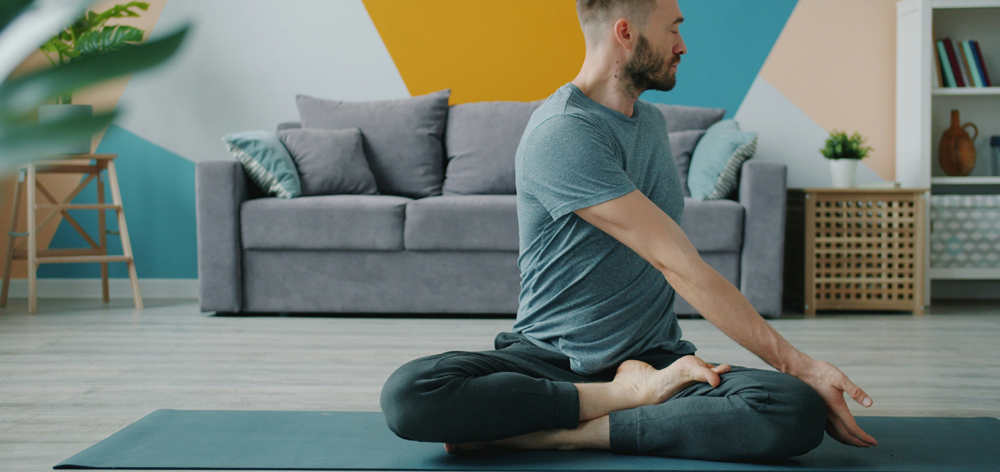
Move your spine through its full range regularly, with gentle rotation to each side, side-bending, and careful extension. Little and often is more useful than one long stretch before bed.
Change your position rather than just your posture, because the body benefits more from shifting between positions than from holding any single position, however correct.
Use your non-dominant side where you can, which for parents means occasionally carrying on the other hip, for desk workers means reaching with the other arm, and for older adults means not always rising from the same side of the chair or bed.
Include whole-body movement in your breaks – arms swinging, twisting your torso… because that uses more joints than a walk with hands in your pockets.
Wind down with some gentle movement rather than only stillness, because a few minutes of moving before bed can do more for how you feel in the morning than any pillow upgrade.
A note on ageing parents
If you've been noticing that a parent or older relative is moving more cautiously, favouring one side, or mentioning morning stiffness that's becoming harder to shake, it's worth taking it seriously rather than assuming it's just part of getting older. A lot of what looks like age-related decline is actually accumulated movement restriction, where the joints have been working in a narrower and narrower range for years and the muscles have adapted around that. The good news is that this kind of restriction is often addressable, even later in life. Gentle, appropriate treatment can restore meaningful range, reduce the stiffness, and help an older person move with more confidence in their own home. If you've been wondering whether it's worth bringing a parent in for a look, it generally is.
When tips aren't enough, consider a Movement MOT at our clinic
The suggestions above are genuinely useful, and for many people they'll make a real difference on their own. But if the stiffness has been around for a while, or it keeps coming back regardless of what you try, it usually means that the underlying joint and muscle function has changed in a way that movement habits alone can't fully address. That's where a proper assessment becomes useful.
Our Movement MOT is a structured check of three things. Mobility and flexibility, or how freely your joints actually move. Postural organisation, or how your body supports itself against gravity. And movement technique, or how well your body coordinates movement as a whole. It's suitable for all ages, from children doing a lot of sport, to adults dealing with the effects of a sedentary working life and older adults who are starting to feel the accumulation of years of restricted movement.
Whatever we find, whether it's a mobility issue, an imbalance, or just a pattern that needs a bit of attention, we'll explain what we've seen and recommend the right kind of support, which might be hands-on treatment, specific exercises tailored to your lifestyle, or simply a few practical changes to how you move through your day. There's no obligation to take things further after the assessment itself, and for many people the clarity alone is worth the visit.
Whether it's for you, your partner, or a parent who's been managing something quietly for too long, it's usually the most useful place to start.