Pelvic discomfort is often normalised in women’s health conversations — from period pain to pregnancy and birth. Because of this, many women are used to tolerating abdominal or pelvic sensations without immediately seeking support.
But when heaviness, pressure, or instability lingers after childbirth, it can feel unsettling — especially when you’re unsure whether it’s weakness, tension, or simply “part of recovery.”
The postpartum period brings enormous change.
Most mothers expect soreness or fatigue in the early weeks. But when a feeling of heaviness continues beyond initial healing, questions naturally arise.
Many women describe it as:
“It just feels heavy.”
“Like something is dropping.”
“Not painful exactly — but not quite right.”
And often, the immediate assumption is weakness.
But that isn’t always the full story.
What Pelvic 'Heaviness' Really Means for Postpartum Women
During pregnancy and birth, the pelvic floor supports increasing load over many months. It stretches, adapts, and works continuously.
After birth, the system doesn’t simply “switch back.”
The pelvic floor is part of a pressure-management team that includes:
- The diaphragm
- The deep abdominal muscles
- The hips
- The lower back
When this system is not coordinating smoothly, pressure inside the abdomen may not distribute evenly.
Instead of weakness alone, heaviness can sometimes reflect:
- Poor pressure control
- Residual muscle guarding
- Incomplete relaxation
- Ongoing load without adequate recovery
This is especially common when sleep is disrupted and stress levels are high — both normal parts of early motherhood.
Why “Holding” More Isn’t Always the Answer
Many mothers respond to heaviness by tightening more.
More Kegels.
More bracing.
More “engagement.”
But if the pelvic floor is already holding tension, adding more contraction can increase downward pressure rather than reduce it.
True recovery involves balance:
Knowing when to engage.
Knowing when to release.
Allowing the diaphragm and pelvic floor to move together again.
The Role of Postpartum Stress & Fatigue
It’s important to acknowledge the environment postpartum.
Night feeds.
Feeding positions.
Carrying and lifting.
Returning to work.
Emotional load.
The nervous system often stays in a heightened state.
When the body remains in “high alert,” muscles — including the pelvic floor — may not fully switch off.
Heaviness can sometimes reflect this ongoing tone.
A Thoughtful Way Forward
If pelvic heaviness is lingering, the first step is not necessarily doing more — but understanding what your body needs.
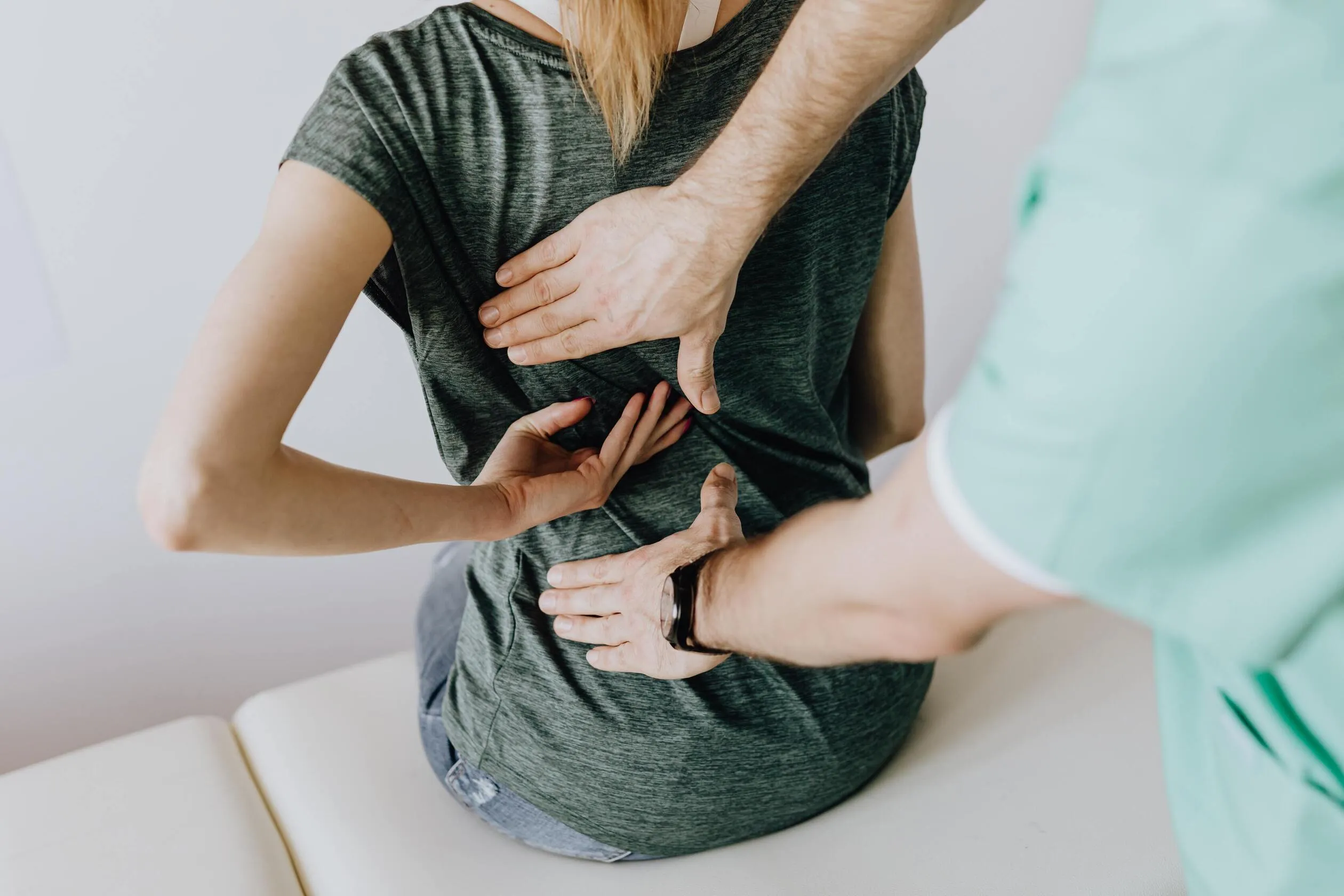
A Movement MOT provides a structured way to assess:
- How you are breathing
- How pressure is being managed
- Whether tension or weakness is dominant
- How your hips and spine are sharing load
- What is the cause of your symptoms
From there, we use what we find to determine the most appropriate course of action.
This may involve:
- Hands-on treatment to restore pelvic and spinal mobility and reduce residual strain
- Targeted soft tissue work to reduce protective or accumulated tension
- Individualised movement retraining to restore coordination between the diaphragm, core, and pelvic floor
- Tailored treatment plan to address pain, mobility issues, and musculoskeletal concerns
Not everyone needs all of these. The priority is selecting what is most relevant to you at the right stage of recovery.
Reframing Recovery
Pelvic heaviness after birth is common.
But it is not something you simply have to accept.
It is often a signal that your pressure system needs recalibration — not just strengthening.
With gentle assessment and guided support, movement can feel lighter, more stable, and more confident again.
If you’re unsure whether what you’re feeling reflects weakness, tension, or a combination of both, we’re here to listen and guide you thoughtfully.