
Everyday Newborn Care: Tummy Time & Movement Guide
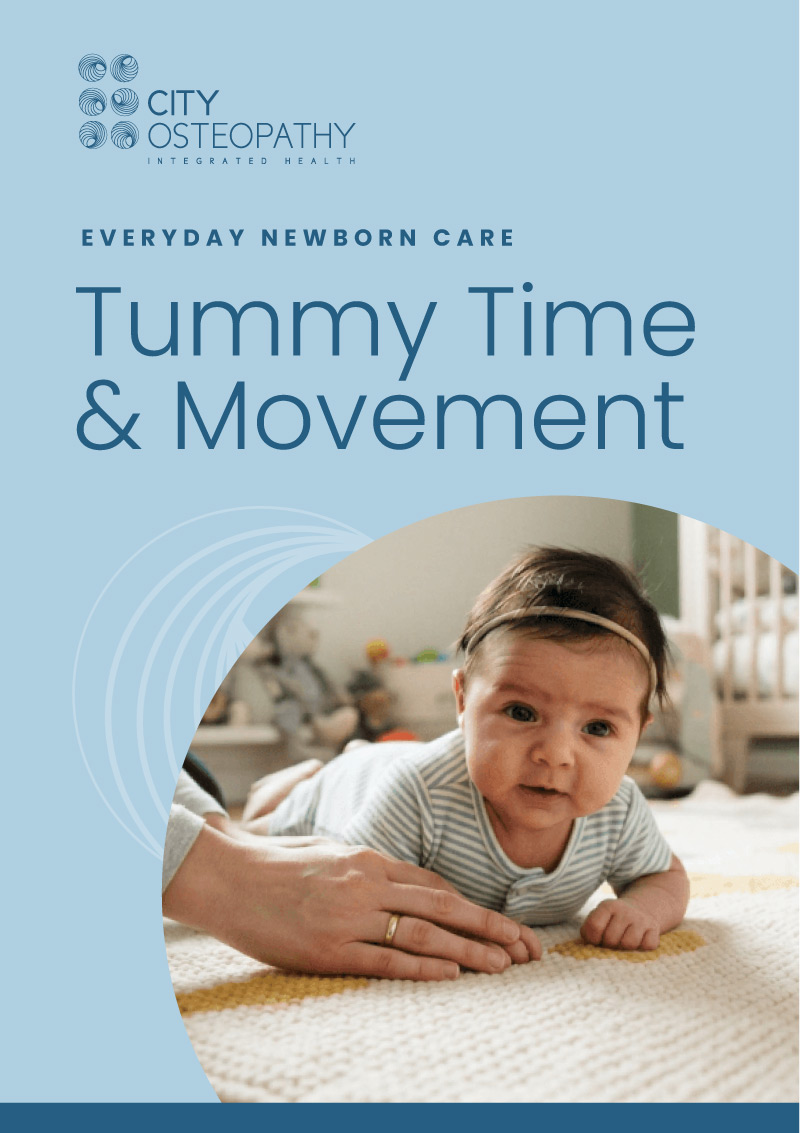
Tummy time builds the neck, shoulder, and core strength your baby needs for rolling, sitting, and crawling later on. It also gives the back of the head a break from constant pressure — which matters directly for preventing flat spots.
Why can't my newborn hold their head up during tummy time?
A baby's muscle tone is still dominated by physiological flexion (the curled, tucked posture carried over from the womb), and the head makes up a much larger share of total body weight than it will later on.
Because of this, a newborn isn't expected to hold their head up steadily at all — early head lifts are brief and effortful by design, not a sign of strength or weakness.
How do I start tummy time with a newborn in the first weeks?
Start with short, supervised sessions (2–3 minutes) right after nappy changes, chest-to-chest with a caregiver or over your lap. Always awake and watched.
At this age, it's completely normal for baby to lift their head only 1–2 seconds at a time — just enough to clear their nose off the surface, not a sustained hold. That brief, intermittent lift is the expected milestone here, not a lack of strength.
How much tummy time does my baby need by 6 weeks?
Build up to several short sessions a day on a mat. Get down to eye level and talk or use a mirror to keep baby engaged.
Aim to build up towards a cumulative 15 minutes a day (the very least) by 6 weeks of age, then continue increasing from there towards 30–60+ minutes as strength builds through this stage. Baby should be lifting their head and pushing up on forearms by the end of it.
Why does my baby hate tummy time?
Here's the honest truth: no baby (or grown-up, for that matter) loves being made to work when they'd rather rest. But tummy time isn't optional — it's a non-negotiable part of healthy development, and both you and baby need to treat it that way, even through the fussing.
If baby hates it: shorten sessions, try it right after a nap or feed (not right before, and not on an overfull tummy), or start on your chest instead of the floor. Consistency and frequency matter more than duration.
When is strong head lift during tummy time a red flag, not a milestone?
If your baby seems unusually strong at lifting or extending their head — persistent arching, resisting being tucked into a curled position, or pushing their head back rather than briefly lifting and resting — this can sometimes point to musculoskeletal strain in the neck or upper spine rather than early strength.
Because the head, neck, and jaw work together as one coordinated system, this kind of tension often shows up alongside feeding difficulties too — a shallow latch, clicking sounds, milk leaking from the mouth, or tiring quickly at the breast or bottle.
This combination — atypical head control plus feeding struggles — is exactly the kind of pattern we check for during a neonatal assessment.
How can City Osteopathy Integrated Health help with tummy time and movement concerns?
Our neonatal assessment looks at how your baby's head, neck and jaw are working together, alongside their posture, movement and comfort when held, fed and put down for tummy time. Our Paediatric Osteopaths lead these appointments.
The point of the assessment is a clear answer – either the tension is there and we can talk through gentle, appropriate treatment, or it isn't and you can stop wondering. Many parents come to us having noticed something during tummy time or feeds for a while without knowing whether it warranted a visit. It's a reasonable thing to want settled.
When should I see someone about my newborn's movement?
If you've been wondering whether your baby's arching, stiffness or strong head lift is more than early strength, an assessment is the direct way to find out.
Book an appointment below or request a callback, and we'll take it from there.