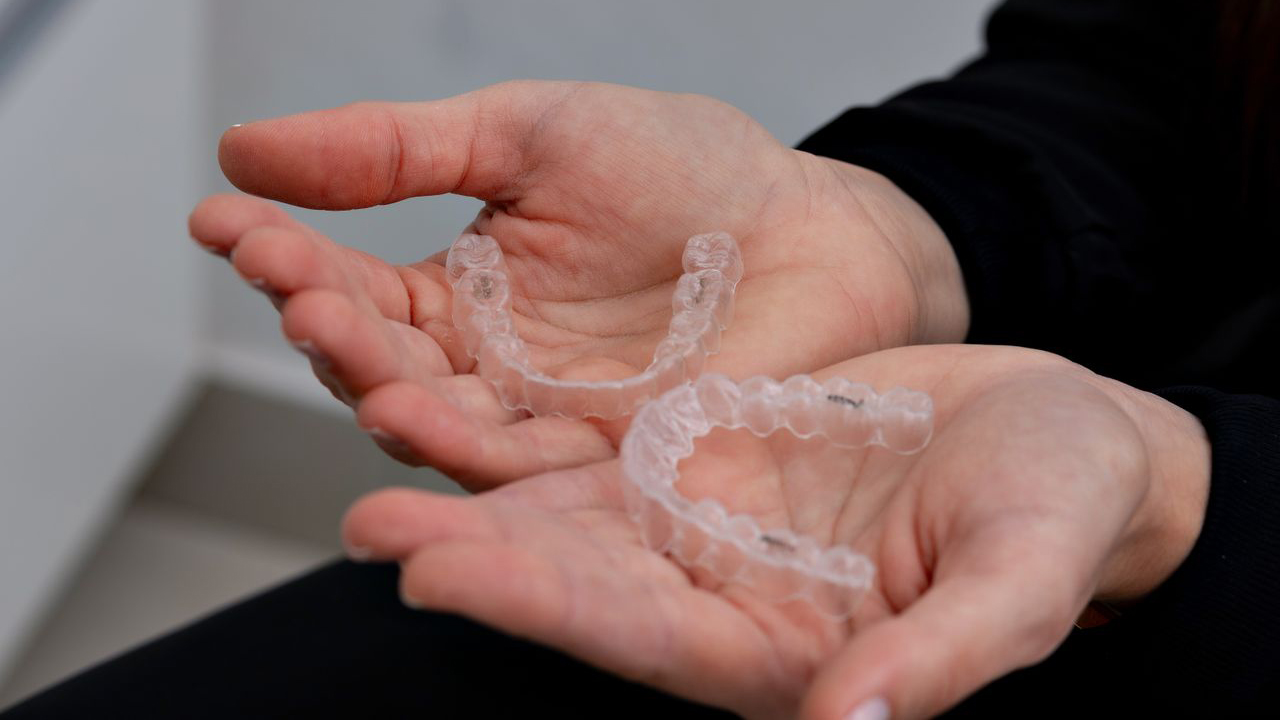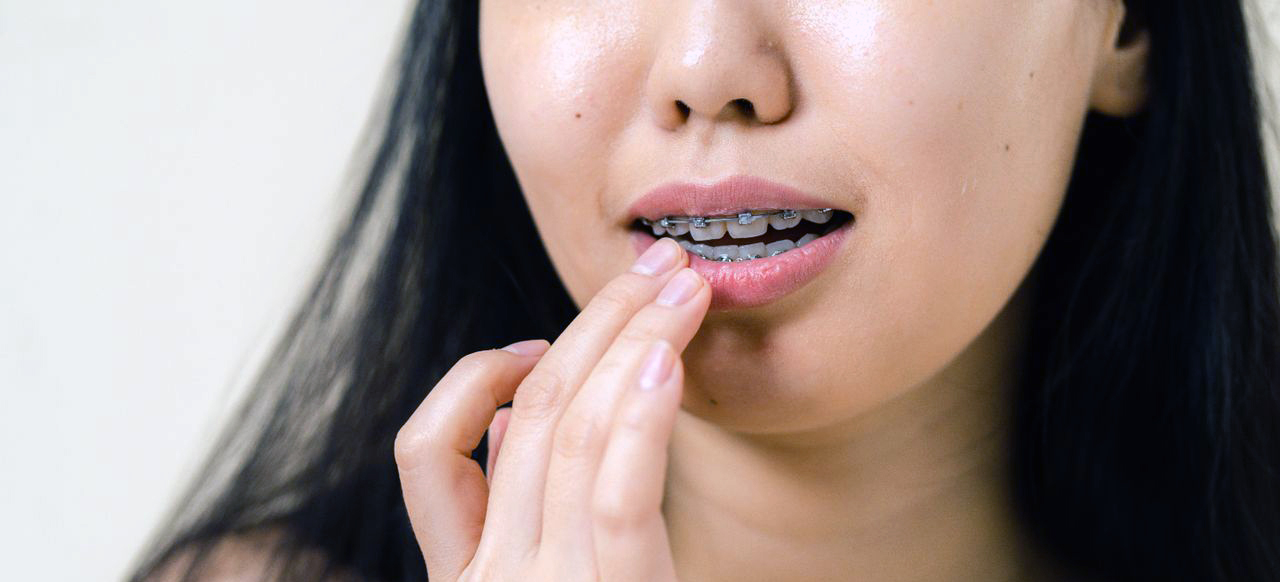
Braces work by applying steady pressure to move your teeth, and that pressure is renewed every time they're adjusted. Over months of treatment, your teeth aren't the only thing adapting. Your jaw, the muscles that move it, and the neck that steadies your head all adjust along with them.
Sore teeth after an adjustment usually pass within a few days. The ache that builds in the jaw, face or neck over the course of treatment is a different thing, and it's the part osteopathy can help with.
How do I manage braces pain?
Start by working out where the pain is. Tooth soreness after fitting or an adjustment is common and usually eases within a few days with softer food.
An ache in the jaw muscles, cheeks, temples or neck, or one that lingers between adjustments, is more likely to be your body's response to the changes treatment brings. That kind of pain tends to respond to different care.
What happens to your jaw during braces treatment?
You have a jaw joint on each side, just in front of your ears, and the two need to move together evenly. Each adjustment changes how your teeth meet, and the muscles on both sides have to relearn how to bring them together.
Over a long course of treatment, small imbalances can build up. Tender teeth on one side lead to chewing on the other. Elastics, if you wear them, add a steady pull that the jaw muscles work against. Some people begin clenching in response to the pressure, often while they sleep. None of these is significant on its own, but repeated for months they can leave one side of the jaw tighter or more tired than the other.
Why can braces pain spread to your neck and head?
The muscles that move your jaw work closely with the muscles that hold your head up and steady it on your neck, so strain in one area tends to be shared with the other.
Head position plays a part as well. Hours looking down at a phone or across at a screen bring the head forward, which changes how the jaw sits and adds to the work the neck is already doing. Over time, that combination can show up as a stiff neck, tight shoulders, or headaches at the temples or the base of the skull.
How can osteopathy help with braces pain?
Osteopathy can't change how your braces move your teeth, but it can help the muscles around them cope with the movement more comfortably.
Our osteopath will look at whether both sides of your jaw are moving evenly, where the muscles are holding the most tension, and how your neck, upper back and posture are adding to it. Treatment is gentle and hands-on, aimed at easing the areas under the most strain, so that each adjustment may be less of a setback for the rest of your body.
Is osteopathy safe if you wear braces?
Our treatment works on the muscles and joints around the jaw, never on the teeth or brackets, so it can run alongside orthodontic treatment. We ask about your braces and how far into treatment you are during the assessment, and adapt our approach to suit.
What can help at home?
- Chew on both sides where you can, so one side of your jaw isn't doing all the work.
- Cut food into smaller pieces for a few days after an adjustment, to save your jaw from opening wide or biting hard.
- Let your jaw release during the day. Keep your lips closed and let your teeth part slightly whenever you notice them pressed together.
- Bring your phone up to eye level rather than dropping your head to look at it.
- Break up long stretches of work or study by standing up and moving your neck and shoulders.
- Use a warm towel on the jaw muscles for a few minutes when they feel tight.
How can City Osteopathy Integrated Health help with braces pain?

The first appointment is an assessment. We look at how your jaw moves and how the muscles around it are coping, along with your neck, upper back and posture, and ask when the ache began, how it follows your adjustments, and what your days involve.
We can't say what's behind it until we've looked. Once we have, we'll explain what we've found in plain terms and what we'd suggest, planned around your orthodontic treatment.
Please note: Your dentist or orthodontist remains your primary contact for any pain resulting from dental procedures, aligners, or braces, as our supportive osteopathic care focuses strictly on surrounding muscular tension rather than dental or orthodontic alignment.
This article is for informational purposes only and does not constitute medical advice. Please book a consultation for guidance specific to you.